




25 Years of Regional Autonomy Amid Recentralization, a Series of Problems Lurk
kompas.id - 18 Februari 2026
The regional autonomy policy was born as a historical correction to the highly centralized form of governance. However, after 25 years, the efforts of decentralization are overshadowed by centralization. Three major issues loom if decentralization is not managed consistently, let alone reverting to a centralized pattern.
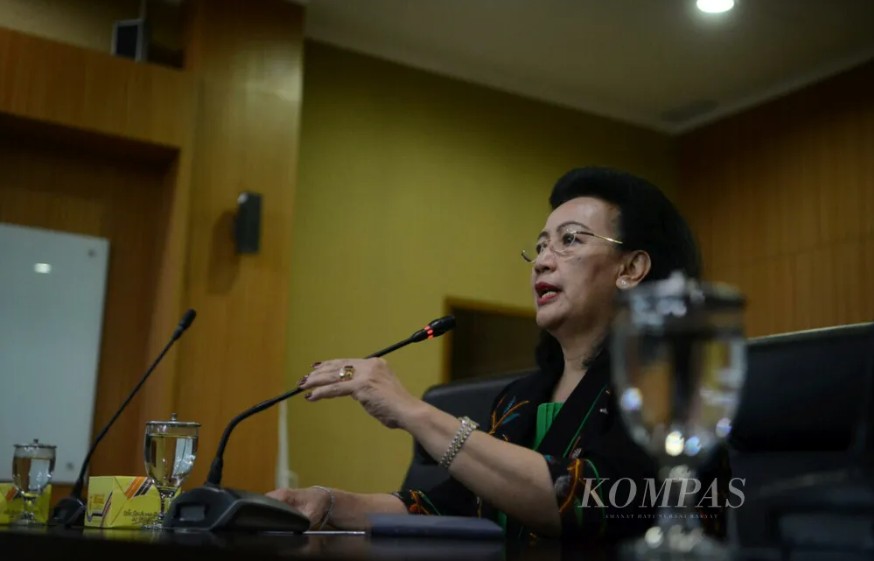
The Vice Chairperson of the Regional Representative Council (DPD) from the Special Region of Yogyakarta, Gusti Kanjeng Ratu Hemas, believes that decentralization has brought about tangible progress. The evidence can be seen in the decrease in poverty rates compared to the early reform era, the increase in the human development index, the growth of public service innovations from the regions, and the more vibrant local political participation through direct regional head elections (pilkada).
"On the other hand, slowing globalization has led countries to tend to strengthen central control. This phenomenon is known as regulatory centralism. Indonesia is not entirely immune to this trend," Hemas said at a seminar titled "A Quarter Century of Regional Autonomy: Evaluation, Risks, and Future Trajectories" held by the National Research and Innovation Agency in Jakarta on Thursday (February 12, 2026).
The indication of centralization was detected through several government policies. It was exemplified in Law Number 1 of 2022 concerning Central and Regional Financial Relations (HKPD), which simplifies regional taxes.
However, Hemas continued, the government subsequently reduced the amount of transfers to the regions (TKD) significantly in the 2026 State Revenue and Expenditure Budget (APBN). This has become a problem considering that these funds are typically used as the backbone for financing basic regional services. As a result, local governments are aggressively seeking original regional revenue (PAD) by increasing Land and Building Tax (PBB), levies, and other charges.
"In several regions, this triggers social resistance. The common people, farmers, small traders, and micro, small, and medium enterprises (MSMEs) feel the fiscal pressure directly. Fiscal autonomy should not turn into a fiscal burden for the people," said Hemas.
The efforts of resentralization, as Hemas clearly stated, have previously been evident from Law No. 23/2014 concerning Regional Government. This policy, he said, emphasizes the division of affairs while simultaneously strengthening the role of provinces in relation to districts and cities.
Hemas also highlighted the Job Creation Law and the online single submission risk-based approach (OSS RBA). He believes these two policies represent another form of recentralization. This is because these regulations centralize many strategic permits to ensure efficiency and investment certainty.
"However, the consequence is a narrowing of district or city discretion in responding quickly to local needs," said Hemas.
From a political perspective, Hemas questioned the implementation of simultaneous regional elections. This contestation mechanism has produced many legally legitimate regional heads, but the democratic legitimacy and independence of regional policies can be debated politically. For him, the governance of the transition needs to be evaluated to avoid creating an impression of excessive political centralization.
Three big problems
To that end, Hemas urged that decentralization be managed as effectively as possible. If not, local governments will face three major problems: merely becoming implementers of central policies, excessive fiscal pressure that triggers social conflict, and regulatory inconsistencies that diminish investment competitiveness.
"Amidst major national agendas, such as downstream processing, the National Capital City, food security, and energy transition, the relationship between the central government and regional governments must be a strategic partnership. It should not be merely a hierarchical relationship. Therefore, we must seriously utilize the momentum of the revision of the Regional Government Law," said Hemas.
Executive Director of the Regional Autonomy Implementation Monitoring Committee (KPPOD) Herman Suparman stated that government support for regional autonomy is inconsistent.
He exemplified this through President Prabowo's Astacita, which positions regional autonomy as a foundation for building the regional economy. This vision is not in line with the efficiency policies outlined in Presidential Instruction Number 1 of 2025 and the 2026 State Budget.
According to Herman, these two policies demonstrate the government's flawed thinking. Based on the vision that has been proclaimed, the President should have strengthened regional fiscal capacity in his first five years. Instead of strengthening it, the President has done the opposite by cutting the budget that should have been decentralized.
"For us, this is an alarm that arises from our thought structure. Once it emerges, it will influence the dynamics of our policies," said Herman.
He also reminded about the key to regional autonomy, which lies in asymmetric decentralization. This approach should be prioritized because regions have varying complexities of issues. Unfortunately, the government still tends to address regional problems with a symmetric approach.
"Regions outside of Java cannot be approached with the same structural approach. There are different contexts of needs, capacities, and issues in each region," said Herman.
The Head of the Center for Domestic Government Research at BRIN, Mardyanto Wahyu Tryatmoko, stated that regional autonomy must be based on three main elements: political, administrative, and fiscal. These three elements must have a balanced weight in their implementation. One cannot be more dominant than the others.
Nevertheless, Mardyanto believes that regions should begin to consider achieving fiscal independence. Fiscal independence will accelerate the progress of a region. If so, in the future, regions will not have to rely too heavily on central transfers.
"Therefore, let us think about this together. We must ensure that there are no disparities between regions, not just the west-east disparity. However, we need to consider how to realize or implement regional autonomy in a balanced manner among these three segments," explained Mardyanto.
The Director of the Center for Legal Studies and Constitutional Theory (PSHTK) at the Faculty of Law of Satya Wacana Christian University (UKSW) Salatiga, Umbu Rauta, revealed that the relationship between the central government and regional governments has been quite fluctuating over the 25 years of regional autonomy.
From this journey, he observed that the main issue in the implementation of policies lies in the impartial and non-permanent legal politics concerning the relationship between the central and regional governments.
Every regime, according to Umbu, will create legal politics that align with its own regime. This step sacrifices the relationship between the central and regional authorities, which is governed by a series of regulatory instruments. As a result, regulatory changes will always occur.
"That is why I propose a perspective or trajectory; let us establish a legal political framework for the relationship between the central and regional governments that adheres to the constitution. The foundation is to respect the sovereignty of the people, which must be within the framework of a unitary state, and whether we like it or not, we must follow the presidential system of government that has already been chosen," said Umbu.
Source: https://www.kompas.id/artikel/en-25-tahun-otonomi-daerah-di-tengah-gejala-resentralisasi-sederet-masalah-mengintai
Dibaca 648 kali